
Alamance Has No 72-Hour Feed
The official ACSO P2C Inmate Inquiry has no verified 72-hour filter, three-day download, or recent-release tab. Its public entry page is a live inmate list. No official navigation reviewed for Alamance County identified a separate archive of people released over the prior three days. The page therefore cannot be treated as a rolling release report, even if a user checks it each morning.
Building a list from three days of screenshots would introduce false certainty. A row’s disappearance establishes only an interval when the visible roster changed. It does not state the precise release date, reason, physical departure time, or destination. The person could have moved within the detention campus or gone to another authority. Obtain the existing ACSO release record for the defined span, or confirm one named event with the Detention Center.
Build a Verified Alamance Release Window
A three-day inquiry works best when the request uses exact start and end dates rather than the phrase “last 72 hours.” The phrase shifts each minute and may be read in different ways. State the local dates, add times when relevant, and identify whether the range is based on the jail’s recorded release time. For one person, add the booking number, booking date, date of birth if known, and arresting or booking agency.
- Set a fixed beginning and ending date and time for the Alamance County release window.
- Search P2C by exact name and compare age, arrest date, primary charge, and booking agency.
- Save the booking identifier and the timestamp of the check while the detail remains accessible.
- Call the Detention Center at (336) 570-6317 and ask whether the event was release, transfer, or an internal move.
- Review North Carolina VINELink for a transmitted custody event and compare its source agency and event date.
- Use the ACSO written form to request the public release record for the named person or the defined date range.
For a same-day event, the Alamance County 24-hour release process narrows the time range. Neither page represents an official sheriff feed. Both lead back to agency records and confirmation.
Fields in Alamance Release Research
The current P2C list and its detail template supply useful matching fields. They do not supply a public three-day archive. A written release record should be requested with fields that establish who, when, why, and where. Asking for an existing record is more precise than asking staff to prepare a custom summary.
| Field | Source and meaning |
|---|---|
| Name and booking number | Identifies the person and the specific county-jail episode. |
| Booking date and time | Separates the relevant episode from prior or later bookings. |
| Booking agency | Shows which agency brought the person into the ACSO detention system. |
| Charges at booking | Helps match the episode; the court record is needed for final disposition. |
| Bond type and amount | Records bail information without proving that release was completed. |
| Release date and time | Places the event within or outside the fixed three-day range. |
| Release reason or code | May distinguish bond, time served, court action, transfer, or another recorded basis. |
| Releasing authority and destination | Helps separate community release from transfer when recorded and public. |
P2C’s detail view may also show a next court date, total bond amount, and booking image. Field presence varies. The Clerk’s court record can explain a dismissal, judgment, bond event, or release order, but it may not show the minute the jail finished physical processing.
Note: A three-day range should use exact dates, because “last 72 hours” changes between the search, call, and written response.
Alamance Weekend Release Checks
A three-day span often crosses a Saturday or Sunday. That makes it useful for catching an event missed by one calendar-day check. It does not create a special weekend rule. ACSO publishes no schedule promising that weekend or holiday releases occur at a set hour, and no verified rule says a date shown for Sunday moves to Friday. The jail controls county processing. DAC and the relevant state prison control a state-prison release.
Use the booking number when calling. If family pickup is planned, ask staff to confirm where and when pickup is permitted only after the release is cleared. The Detention Center operates around the clock, but the sheriff’s front office lists weekday business hours. Those operating facts should not be confused with a guaranteed release time. A court order, bond terms, another hold, identity review, or paperwork can affect the event.
A holiday may also affect when a records office answers, not the legal status itself. Keep the timestamp from each check. When the public interface changes before staff can be reached, save the identifier and request the release sheet after offices reopen.
Why Alamance Release Details Vanish
Alamance P2C has an unusual and useful combination. Its inmate-detail template includes a “Release Date” field and a photo, yet users enter through a current Inmate Inquiry with no labeled release archive. No official retention promise says a record will remain public for 24 hours, 72 hours, or any set period after custody ends. The best practice is to preserve the booking identifier before the row drops from the current list.
This design explains why a three-day view cannot be reconstructed from the website alone. Once the row is no longer reachable, the durable path is ACSO records. A date previously seen on the detail page should still be checked with the agency, since the template’s field labels do not explain every code or destination.
The public ACSO records instructions lead to the required written request form.
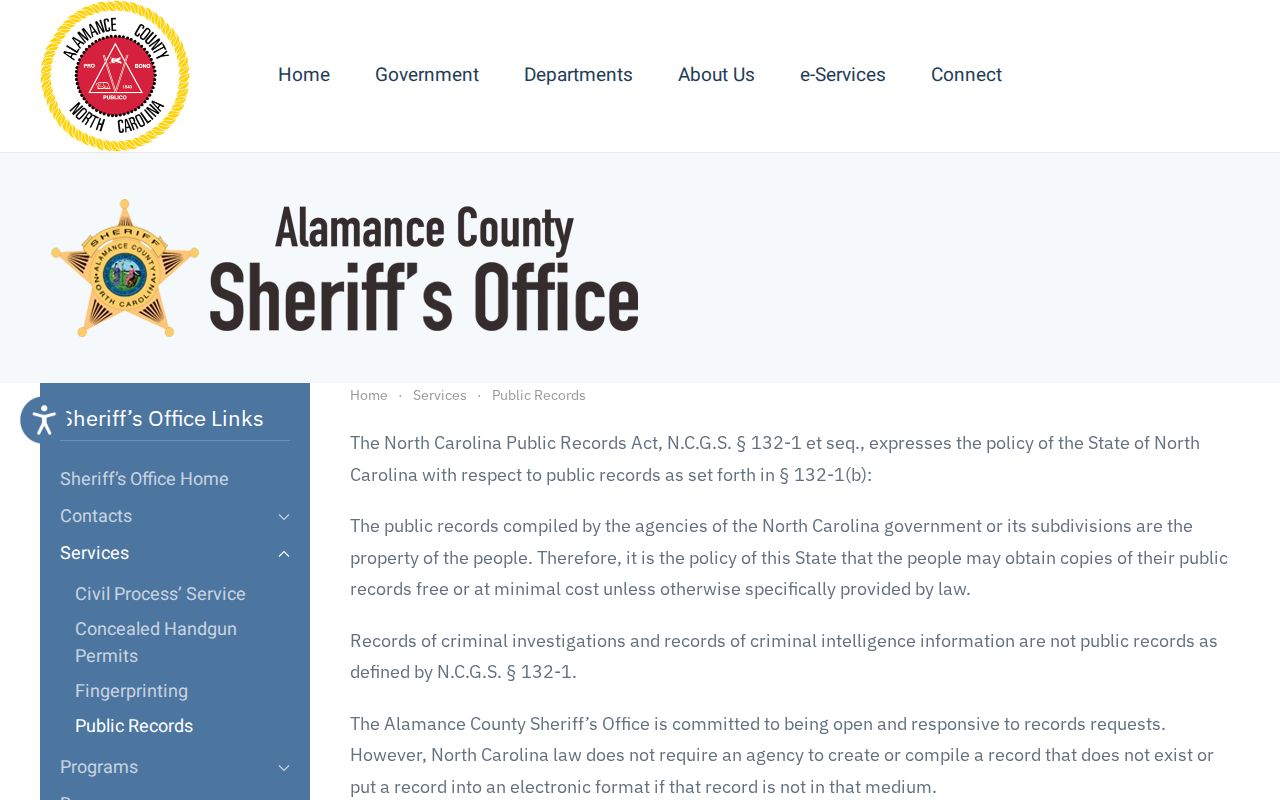
The official instructions are the archive fallback when P2C no longer exposes the booking detail needed for a three-day check.
Request Alamance Three-Day Release Records
ACSO’s public-records route requires a written request through its linked form. Identify the fixed range and the records sought. For a single person, provide the full name, booking number, booking date, and other safe matching facts. For a date-range request, ask for an existing release log or records that already contain the defined release dates. Do not ask the office to research a story, infer destinations, or create a new list if no list exists.
Request public fields such as booking number, booking date and time, booking agency, release date and time, release reason or disposition code, releasing authority, and destination or transfer agency if recorded and public. Ask for electronic delivery and a cost estimate. No ACSO-specific release-sheet fee was found. North Carolina’s ordinary copy rule generally limits uncertified public-record charges to actual reproduction cost unless another law applies, but the custodian should quote the real cost.
The response may contain redactions supported by law. Ask the custodian to provide separable public portions rather than withhold an entire record because one part is exempt. Juvenile information, criminal-investigation material, and protected personal data may be treated differently from basic public law-enforcement information.
Note: Ask for an existing record and defined fields; the public-records law does not require ACSO to create a custom release report.
Read Alamance Release Destinations Correctly
Leaving the Alamance County roster is not always release to the community. The person may have transferred from the main Detention Center to its Annex, moved to another county, entered North Carolina DAC custody, gone to federal custody, or been transferred under immigration authority. An internal move between the main jail and Annex is not a release. Ask which agency, if any, accepted custody.
| Possible event | Best next source |
|---|---|
| Community release from ACSO | ACSO release record, VINELink event, and court case where needed. |
| Main jail to Annex move | ACSO confirmation; both buildings use the same public P2C system. |
| Transfer to state prison | NC DAC Offender Public Information by name or offender number. |
| Federal custody or release | BOP Inmate Locator, then the relevant federal custodian. |
| Immigration transfer | ICE Online Detainee Locator and the responsible field office. |
North Carolina eCourts can preserve the case disposition and judgment. It is a legal-record check, not a jail-door timestamp. When destination and legal basis both matter, confirm the custody event with ACSO and use a second official source for the next stage.
Confirm One Alamance Release
A broad three-day request may take longer than a targeted check. For one named adult, start with the booking episode and call the Detention Center. Then compare VINE and the court record. If the person entered NC DAC custody, search the state offender record rather than treating the county departure as community release. If P2C no longer exposes the row, submit the written ACSO request.
The full named-person path is available on the Alamance County released inmates home page. Use two sources when a destination or legal basis matters. A custodian record establishes the custody event, while the court, DAC, BOP, or ICE source explains the next stage within its own scope.